
PROGRAM NOTES
fanfare for the common man
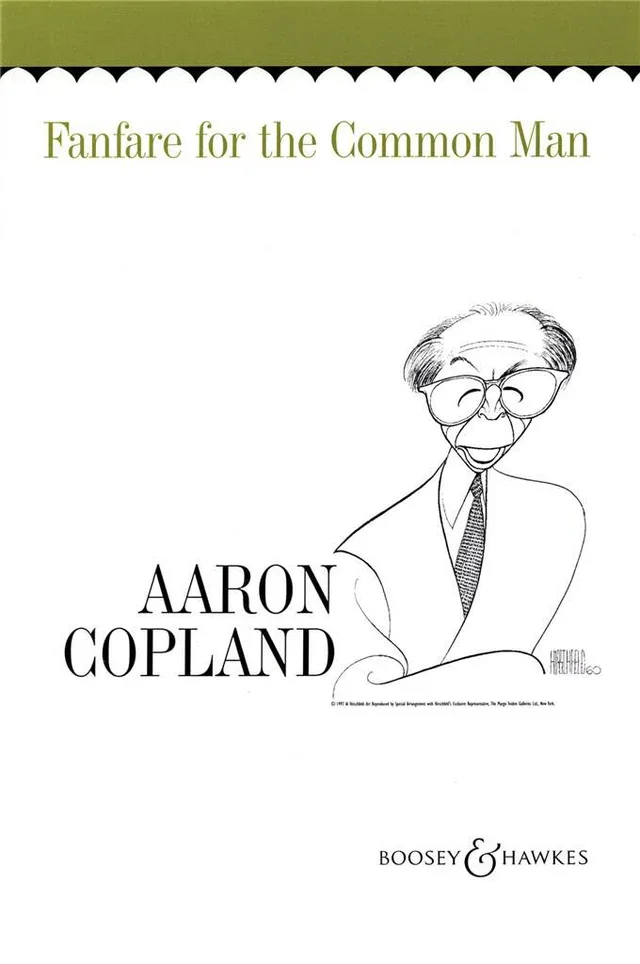
by Aaron Copland
In the summer of 1942, Eugene Goosens asked eighteen American composers to contribute patriotic fanfares for performance by the Cincinnati Symphony Orchestra during its 1942-43 season. Ten of these were written for brass and percussion alone and were selected for publication. These works were not only to enrich the literature for brass and percussion but to pay tribute to all those involved in World War II.
Among those composers participating were Paul Creston, Walter Piston, Howard Hanson, Deems Taylor, Virgil Thomson, Bernard Wagenaar, and Aaron Copland.
The titles were selected by the composers themselves, and it is not surprising that Aaron Copland should have chosen to do honor to the man who performs no deeds of heroism on the battlefield but who shares the labors, sorrows, and hopes of those who strive for victory.
From the concert stage to the gridiron halftime show, the Montreal Olympics, and television commercials, Copland's Fanfare for the Common Man has challenged performers and excited listeners. The score was written in 1943 "for the common man, who, after all, was doing all the dirty work in the war and in the army. He deserved a fanfare." Copland later used it as an integral part of his Third Symphony.
"Parade" from Pacific Celebration Suite
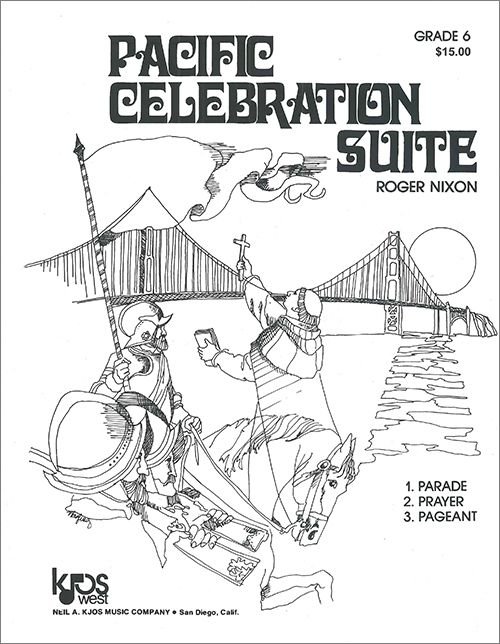
by Roger Nixon
Pacific Celebration Suite was composed in commemoration of the bicentennial of the community of San Francisco, California. The San Francisco Presidio and the Mission San Francisco de Asis (Mission Dolores) were established while California was Spanish territory. Subsequently, beside a shallow cove inside the Golden Gate, colonists settled the pueblo of Yerba Buena, forerunner of the city of San Francisco. Pacific Celebration Suite embodies a good deal of imagery related to these events and, in a sense, the work might be considered a tonal fresco.
The first movement, Parade, is a fanfare-march which embodies some of the imagery and spirit of the San Francisco Presidio, with soldiers, horses, and weapons on parade during the Old Spanish Days of California.
Sure on This Shining Night

by Samuel Barber
arr. by Adam Harrington
The Knoxville-born writer James Agee (1909-1955) was a poet, journalist, novelist, and screenwriter. He was also the author of Let Us Now Praise Famous Men, an eloquent and anguished testimony about the essential human dignity of impoverished sharecroppers during the 1930s. The book is regarded as one of the most significant literary documents associated with the Great Depression.
Barber’s Sure on This Shining Night, originally composed in 1938 based on an untitled poem by Agee, transforms the intimate art song for concert band, offering a warm, lush, and lyrical setting. This piece originally written for low voice and piano and utilized a poem by James Agee.
Finale from Symphony No. 2
by Charles Ives
arr. by Jonathan Elkus
The synthesis of European symphonic technique and living American music is the chief premise of Ives’s Symphony No. 2. In form and general sonority, the work takes its cue from Brahms, Dvorák, and Tchaikovsky, whose symphonies were performed often enough in the U.S. at the end of the 19th century, and which Ives studied at Yale. Ives even bows to the pre-eminent symphonist of the time, quoting a snippet of Brahms’s Symphony No. 3 at several points in the work.
But whereas the formal design and much of the harmonic language of this symphony bespeaks a European provenance, its content stems largely from the music Ives grew up with. Much of the work’s melodic material derives from songs, hymns, anthems, and dance tunes well known in this country when Ives was coming of age, and the composer does not hesitate to place these references cheek by jowl with more conventionally symphonic sounding ideas. Ives develops those melodies that serve as his main themes in a highly inventive manner, as a good symphonist traditionally would do. More notably, the contrapuntal “piling up” of quotations from popular sources produces the symphony’s most audacious harmonic moments, particularly in the finale.
As did so many of Ives’s major compositions, the Symphony No. 2 languished unheard for many years before receiving a performance. It was not until 1951 that the piece finally had its premiere, when the New York Philharmonic Orchestra played it under the young Leonard Bernstein. Ives, then in fragile health and having long ago turned his back on the musical establishment represented by major orchestras, declined the conductor’s invitation to attend the performance. But he listened to a radio rebroadcast of the concert two weeks later at the home of friends in Connecticut. “After it was over," one of his hosts recalled, “I’m sure he was very much moved. He stood up, walked over to the fireplace, and spat! And then he walked out into the kitchen. Not a word. And he never said anything about it. I think he was pleased, but he was silent.”
- Program Note by Paul Schiavo
The finale of the Second Symphony is a reworking of the lost overture, The American Woods, a piece played by Charles Ives's father in 1889 and also by the Danbury (Connecticut) Band. Regarding this work, Ives wrote the following in his Memos:
Some of the themes of this symphony suggest gospel hymns and Stephen Foster. Some nice people, whenever they hear the words "Gospel Hymns" or "Stephen Foster" say "Mercy Me!" and a little high-brow smile creeps over their brow -- "Can't you get something better than that in a symphony?" The same nice people, when they go to a properly dressed symphony concert under proper auspices, led by a name with foreign hair, and hear Dvorak's New World Symphony, in which they are told this famous passage was from a Negro spiritual, then think that it must be quite proper, even artistic, and say, "How delightful!"
Besides evoking the spirit of Foster in its French horn theme "while over it the old farmers fiddled a barn dance with all of its jigs, gallops, and reels," the movement works up to a rousing climax in Columbia, the Gem of the Ocean. In the 1940s, Ives changed the last three measures of the movement from conventional harmonies to the wildly dissonant flourish, either as joke or as a remembrance of the way the old fiddlers used to end the barn dance with a crunching chord.
Country Gardens
by Percy Grainger
arr by John Philip Sousa
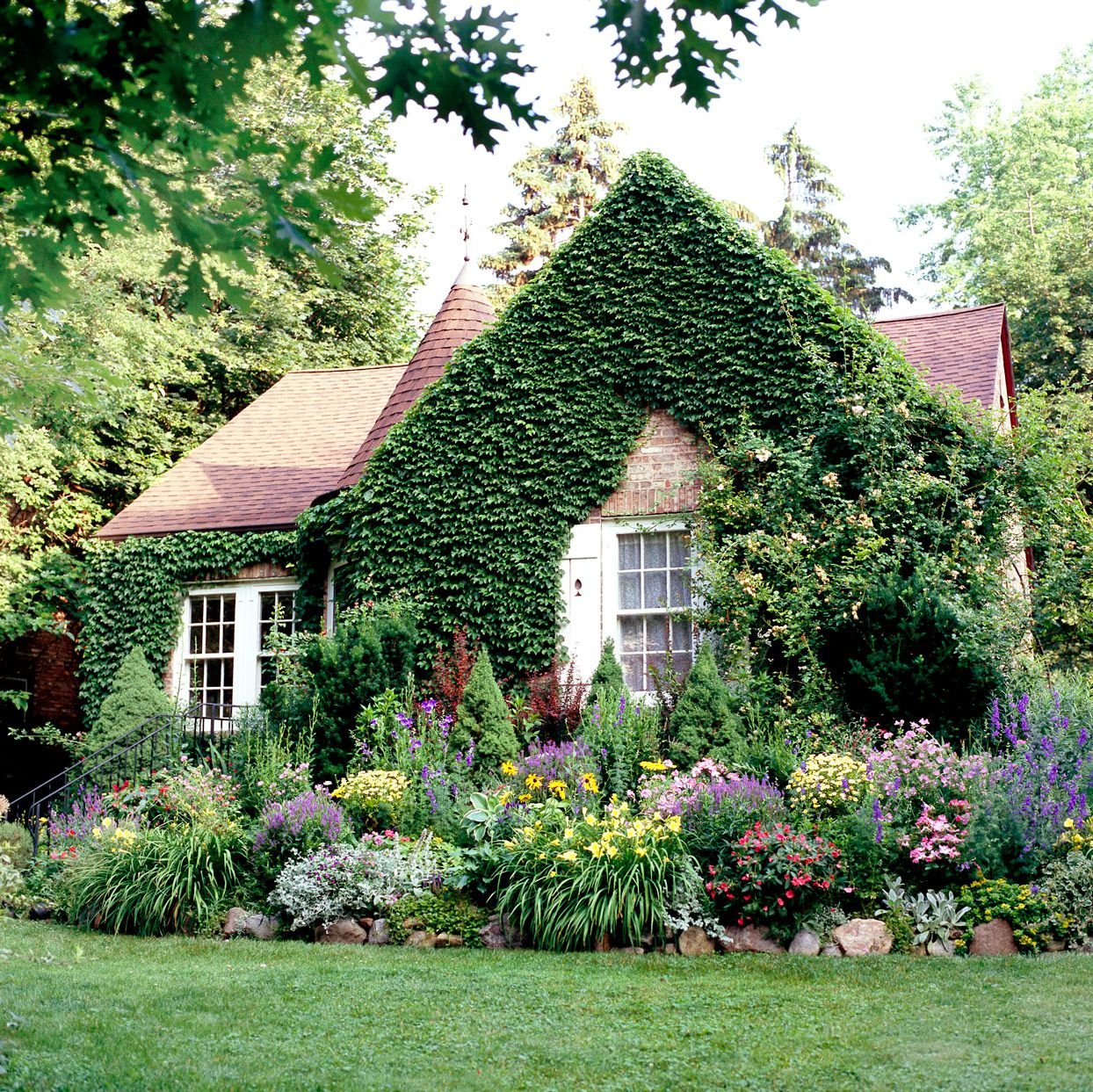
The charismatic, quirky, brilliant character of Percy Grainger is not likely to be recreated. A genius by any measure, Grainger was a piano virtuoso, a major force in the collection and preservation of folk songs, and a visionary composer of considerable gifts.
In 1918, Grainger wrote to Cecil Sharp about a new folk song setting he had prepared. During one of his Liberty Loan concerts, Percy had improvised on one of Sharp’s Morris dance tunes called Country Gardens - a Handkerchief Dance. Percy’s version of Country Gardens proved so popular that he decided to commit it to paper and presented it as a birthday gift to his mother in 1918. As with his other folk song settings, it was “lovingly and reverently dedicated to the memory of Edvard Grieg.”
John Philip Sousa admired Grainger’s compositions and programmed them regularly. Sousa knew a good tune when he heard it, and decided to arrange and feature Country Gardens in concerts with his own band.
As the Buffalo Roam
by Gabe Musella
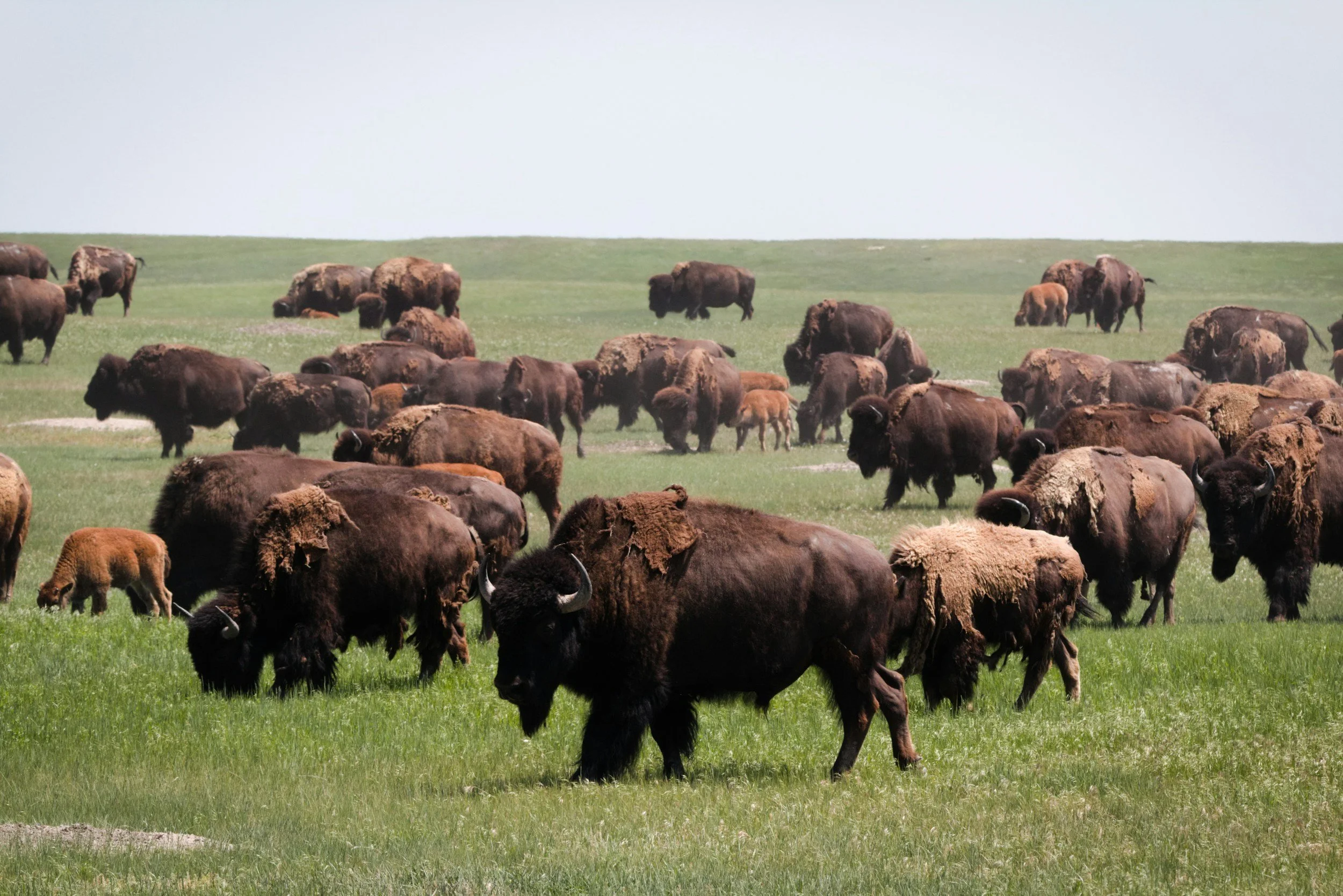
This work was commissioned by the West Plains High School Wind Symphony, the 2025 Texas Class 4A Honor Band. Their conductor, Heath Nall, requested a work that would depict the wide open vastness that defines the High Plains region of Texas. The music is bold and spirited with moments of tenderness and introspection. Despite the lack of a specific storyline, the listener is invited to use their own imagination to create one. The piece is dedicated to Heath's parents, Jack and Donna Nall.
The Incredible Flutist
by Walter Piston
arr. by Frank Erickson
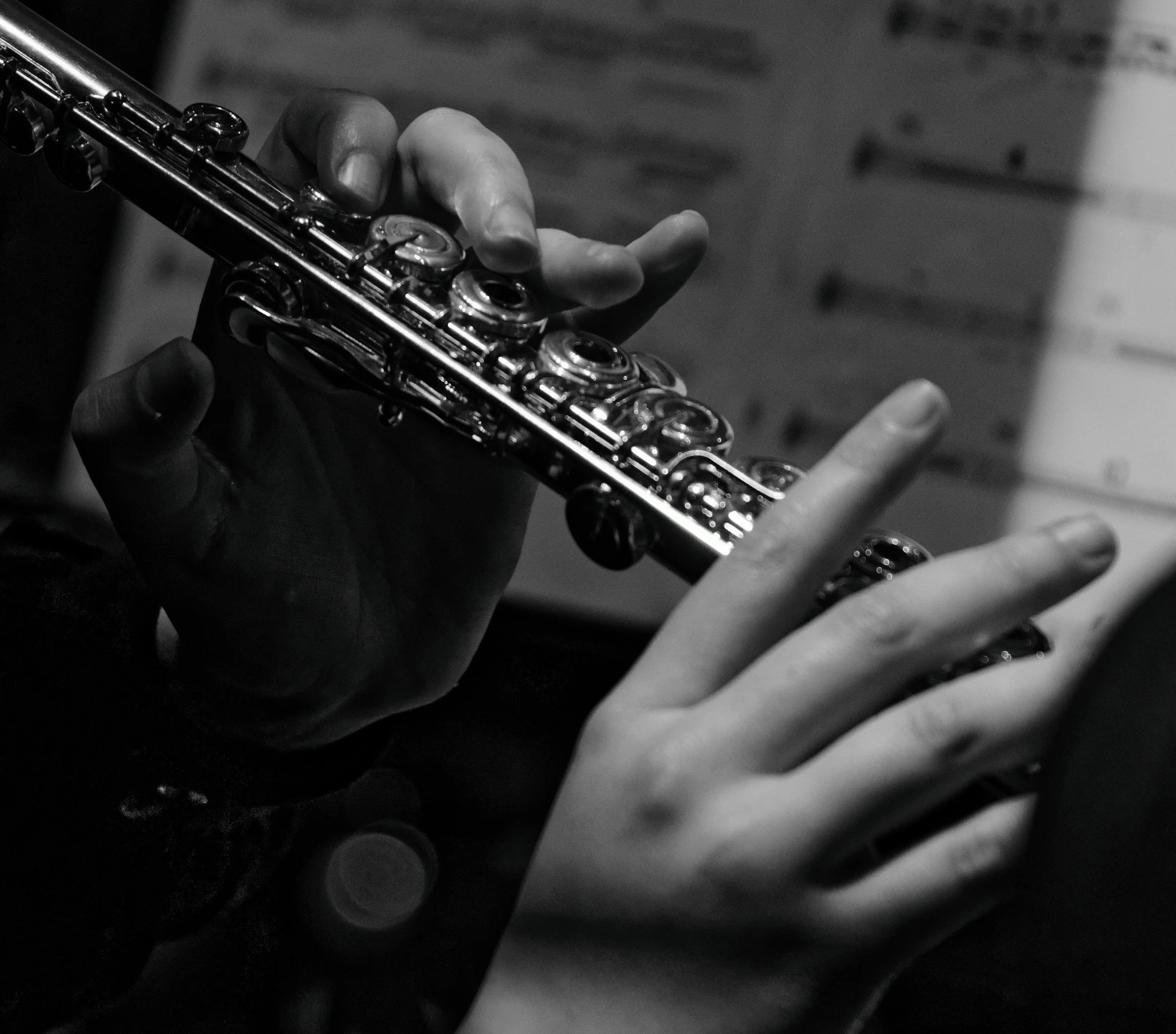
The Incredible Flutist is a ballet composed by Walter Piston in 1938, his only composition for the stage. The ballet received its premiere by the Boston Pops under Arthur Fiedler on May 30 of that year.
The libretto, written by Piston and Hans Wiener, describes a marketplace teeming with activity and enlivened by a circus. A flutist acts as a snake charmer and also charms women. A rich widow flirts with a merchant, is discovered by her lover, faints, and is revived by the flutist's music. The circus then leaves the square.
Piston extracted an orchestral suite from the ballet, which was premiered on November 22, 1940, by the Pittsburgh Symphony under Fritz Reiner. The suite is in thirteen movements.
America the Beautiful

by Samuel Ward
arr. by Carmen Dragon
The version of this patriotic song popular today was first published in 1910 as a combination of Samuel Ward’s hymn tune “Materna” (1882) and Katharine Lee Bates’s poem “America” (1893). Bates, an English professor at Wellesley College, wrote the poem after having traveled to the top of Pikes Peak in Colorado via covered wagon and mule. From the top of the mountain, she could see almost to Kansas to the east and across to the Rocky Mountains to the North—a view that inspired gratefulness and hope. “All the wonder of America seemed displayed there.” The poem was set to a number of tunes over time, but the tune that eventually stuck was Ward’s “Materna”—a melody originally meant for the hymn “O Mother Dear, Jerusalem” by the Scottish theologian David Dickson. In 1904, Bates published an updated version of the poem that simplified its phrasing and rhyme, easing its musical setting, but the song’s unrelenting optimism and splendorous vision remained.


