
COMPOSERS
AARON COPLAND
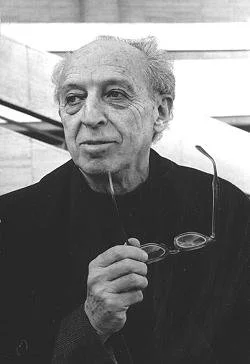
Aaron Copland was an American composer, often referred to as "the Dean of American composers."
He studied closely with the legendary pedagogue Nadia Boulanger, and his music achieved a balance between modern music and American folk styles, and the open, slowly changing harmonies of many of his works are said to evoke the vast American landscape. Copland incorporated percussive orchestration, changing meter, polyrhythms, polychords, and tone rows.
In the 1970s, Copland virtually stopped composing, although he continued to conduct. In addition to composing and conducting, Copland wrote several books, including What to Listen for in Music (1939), Music and Imagination (1952), and Copland on Music (1960).
Copland was awarded the Pulitzer Prize in composition for Appalachian Spring. His scores for Of Mice and Men (1939), Our Town (1940), and The North Star (1943) all received Academy Award nominations, while The Heiress won Best Music in 1949.
ROGER NIXON
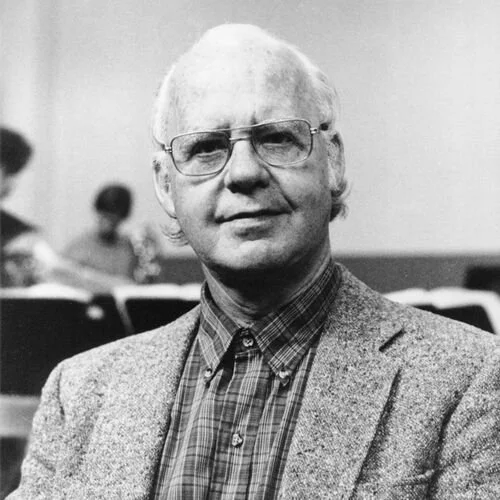
Roger Nixon was an American composer, musician, and professor of music.
Roger Nixon was born and raised in California's Central Valley towns of Tulare and Modesto. Nixon attended Modesto Junior College from 1938-1940 where he studied clarinet with Frank Mancini, formerly of Sousa's Band. He continued his studies at the University of California at Berkeley, majoring in composition and receiving a Bachelor of Arts degree in 1941. His studies were then interrupted by almost four years of active duty in the Navy during World War II, serving as the commanding officer of an LCMR in the Atlantic.
Following the war Nixon returned to Berkeley, first receiving a M.A. degree and later a Ph.D. His primary teacher was Roger Sessions. He also studied with Arthur Bliss, Ernest Bloch, Charles Cushing, and Frederick Jacobi. In the summer of 1948, he studied privately with Arnold Schoenberg.
From 1951 to 1959, Nixon was on the music faculty at Modesto Junior College. He was then appointed to the faculty at San Francisco State College in 1960 and began a long association with the Symphonic Band, which premiered many of his works. Most of Nixon's works are for band, but he has also composed for orchestra, chamber ensembles, solo piano, choral ensembles, as well as song cycles and an opera.
Nixon has received several awards including a Phelan Award, the Neil A. Kjos Memorial Award, and five grants from the National Endowment for the Arts, and he was elected to the American Bandmasters Association in 1973. In 1997, Nixon was honored by the Texas Bandmasters Association as a Heritage American Composer. His final post was as Professor Emeritus of Music at San Francisco State University.
samuel barber
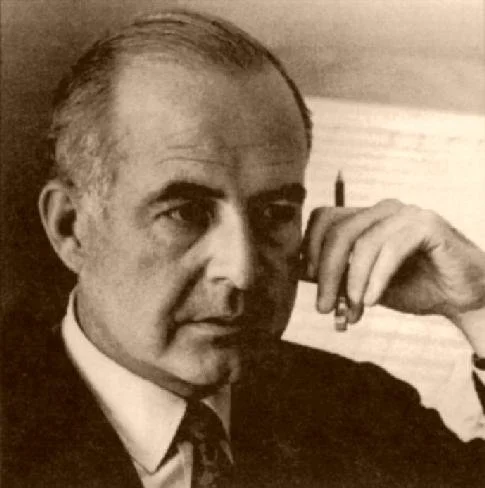
Samuel Barber was an American composer of orchestral, opera, choral, and piano music. Barber was born into a comfortable, educated, social, and distinguished Irish-American family.
His father was a doctor, and his mother was a pianist. His aunt, Louise Homer, was a leading contralto at the Metropolitan Opera and his uncle, Sidney Homer, was a composer of American art songs. Louise Homer is noted to have influenced Barber's interest in voice. Through his aunt, Barber had access to many great singers and songs. This background is further reflected in that Barber decided to study voice at the Curtis Conservatory.
Barber began composing seriously in his late teenage years. Around the same time, he met fellow Curtis schoolmate Gian Carlo Menotti, and the two would form a lifelong personal and professional relationship. At the Curtis Institute, Barber was a triple prodigy of composition, voice, and piano. He soon became a favorite of the conservatory's founder, Mary Louise Bok. It was through Bok that Barber would be introduced to his one and only publisher, the Schirmer family. At the age of 18, Barber won a prize from Columbia University for his Violin Sonata (now lost or destroyed by the composer).
At Curtis, Barber met Gian Carlo Menotti with whom he would form a lifelong personal and professional relationship. Menotti supplied libretti for Barber's operas Vanessa (for which Barber won the Pulitzer) and A Hand of Bridge. Barber's music was championed by a remarkable range of renowned artists, musicians, and conductors including Vladimir Horowitz, John Browning, Martha Graham, Arturo Toscanini, Dmitri Mitropoulos, Jennie Tourel, and Eleanor Steber. His Antony and Cleopatra was commissioned to open the new Metropolitan Opera House at Lincoln Center in 1966.
Barber was the recipient of numerous awards and prizes including the American Prix de Rome, two Pulitzers, and election to the American Academy of Arts and Letters. His intensely lyrical Adagio for Strings has become one of the most recognizable and beloved compositions, both in concerts and films ("Platoon," "The Elephant Man," "El Norte," "Lorenzo's Oil").
adam harrington
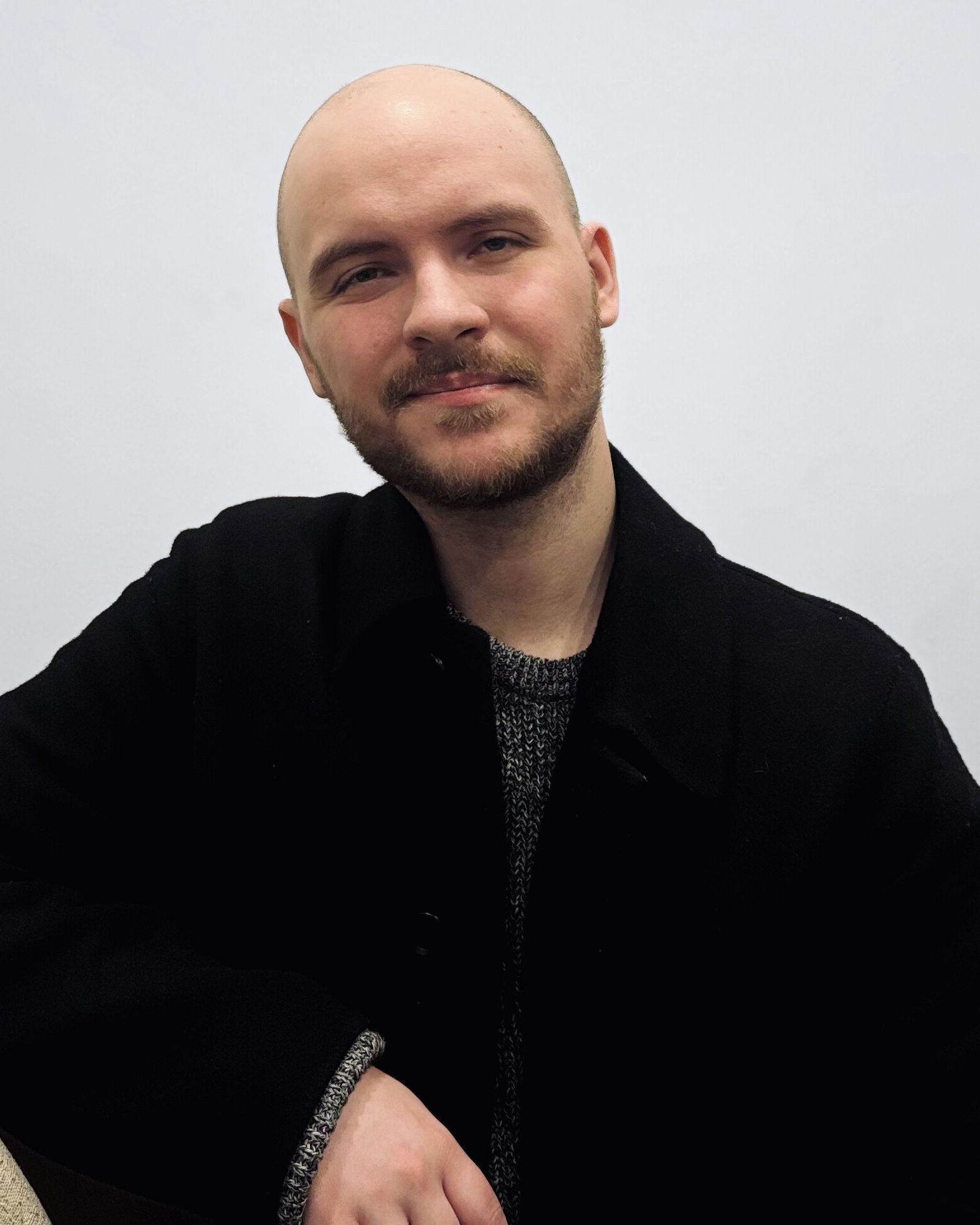
Adam Harrington (b. 2000) is an American composer writing narrative and descriptive music that is exciting, colorful, and expressive. Visual and literary art play a key role in his work as many pieces are based on paintings, poetry, and narrative media. He grew up in love with film scores and the orchestra, spending significant time as primarily a horn player and is still active as a performer today. Harrington is the winner of NYC Orchestra Project’s 2026 Call for Scores with his work “Fireworks”. Harrington received his bachelor’s in horn performance at the University of Houston and is now pursuing his master’s in concert composition at New York University.
CHARLES IVES
arr. by Jonathan Elkus
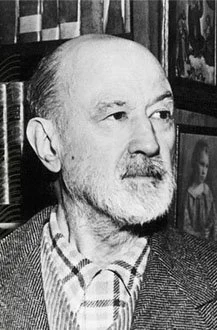
Charles Ives was an American composer.
Widely considered an innovator, Ives was the son of U.S. Army Bandleader George Ives. At a young age, Ives studied organ and went on to Yale to study composition with Horatio Parker. Believing that he could not earn a living writing the music that he wanted to write, he formed a successful insurance business and composed in the evenings. Much of his music was ignored during his own lifetime, and many of his compositions were not published until decades after he had written them.
His compositional style was largely experimental, but also incorporated American folk tunes and hymn songs to paint a unique tonal portrait. In 1947 he received a Pultzer Prize for his Third Symphony (1911), after its debut only a year earlier in 1946. He died in New York City in 1954, leaving a legacy that predated most of the twentieth century innovations such as atonality, aleatoricism, polytonality, microtones, multiple cross-rhythms, and tone clusters.
PERCY GRAINGER
arr. by John Philip Sousa
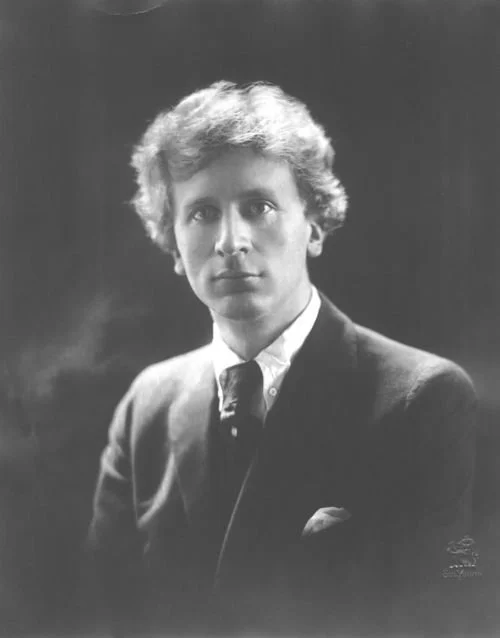
Percy Grainger was an Australian-born composer, pianist and champion of the saxophone and the concert band, who worked under the stage name of Percy Aldridge Grainger.
Grainger was an innovative musician who anticipated many forms of twentieth-century music well before they became established by other composers. As early as 1899, he was working with "beatless music", using metric successions (including such sequences as 2/4, 2½/4, 3/4, 2½/4).
In December 1929, Grainger developed a style of orchestration that he called "Elastic Scoring". He outlined this concept in an essay that he called, "To Conductors, and those forming, or in charge of, Amateur Orchestras, High School, College and Music School Orchestras and Chamber-Music Bodies".
In 1932, he became Dean of Music at New York University, and underscored his reputation as an experimenter by putting jazz on the syllabus and inviting Duke Ellington as a guest lecturer. Twice, he was offered honorary doctorates of music, but turned them down, explaining, "I feel that my music must be regarded as a product of non-education."
GABE MUSELLA
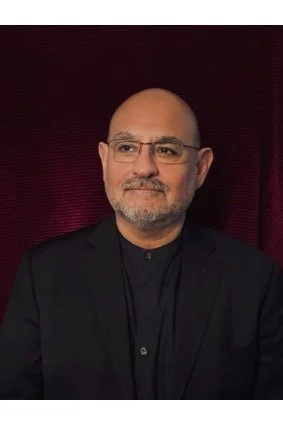
Gabe Musella serves as UIL Assistant Music Director in Austin, Texas. Prior to his current position, he taught for 30 years in Texas, where his bands earned UIL Sweepstakes Awards in 8 different Varsity and Non-Varsity categories, performed at The Midwest Clinic and MFA National Concert Festival, and placed as finalists in TMEA Honor Band and at the UIL State Marching Contest. While at Spring HS, the band program was designated a Grammy Signature School, a Houston Symphony Orchestra Residency School, and was featured in THE INSTRUMENTALIST. Spring Band ensembles earned five invitations to perform at The Midwest Clinic between 2008 and 2016, and Spring chamber groups received awards at the prestigious Fischoff, Coltman, and other chamber music competitions.
Mr. Musella is an active composer and arranger whose works for band, choir, jazz ensemble, orchestra, percussion, and chamber ensembles have been performed at The Midwest Clinic, PASIC, WIBC, the Music For All National Festival, TMEA, TBA, and other conferences throughout the country and abroad. The Texas Tech Goin’ Band from Raiderland performed “Wreck ‘Em Fanfare” at the 2023 Macy’s Thanksgiving Day Parade, and his works have been premiered by The United States Air Force Band, the TMEA All State Jazz Ensemble, the ATSSB All State Band, and ensembles at the University of Texas-El Paso, Texas Tech University, and the University of Houston. His publishers include RBC, C. Alan, Boosey & Hawkes, Carl Fischer, Kjos, Row-Loff, TRN, ALRY, Wingert-Jones, and MKT Music Publications. Mr. Musella has appeared as a guest conductor with university, community, and high school region bands throughout Texas. He is a co-conductor of the Spring ISD Alumni Band in Houston.
Gabe received the Meritorious Achievement Award from the Texas Bandmasters Association and the Specs Excellence in Music Education Award from the Houston Symphony Orchestra. He holds a BM in Composition and a MM in Conducting, both from Texas Tech University, where he studied with James Sudduth, Keith Bearden, and Mary Jeane van Appledorn. He is grateful to mentors Tom Bennett, Eddie Green, Philip Geiger, Rodney Klett, Joe Dixon, Rick Lambrecht, Kenny Capshaw, Richard Crain, James Edwards, Randy Vaughn, Rick Ghinelli, Mike Warny, and Scott McAdow. His memberships include ASCAP, ABA, TMEA, TBA, TMAA, Phi Beta Mu, Phi Mu Alpha Sinfonia, and he serves as Chamber Coordinator for the Music For All National Concert Festival. He is currently President of the Foundation for Music Education, and he has been on the staff of the Texas Tech Band and Orchestra Camp since 1985. Gabe and his wife, Alice, are very proud of their son Alex, who has earned degrees from Texas A & M – Corpus Christi and Sam Houston State University.
WALTER PISTON
arr. by Frank Erickson
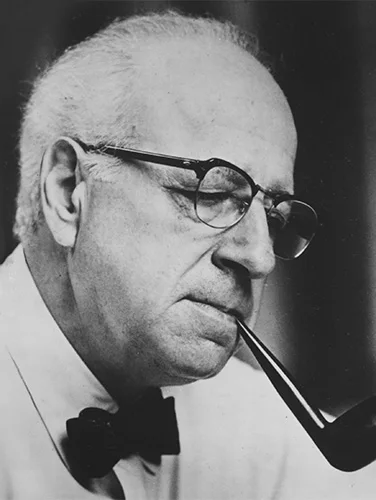
Walter Piston was recognized in his lifetime as the ultimate musical craftsman, producing a body of orchestral and chamber work distinguished by its quintessential neo-classic qualities of clarity and proportion. Also a noted educator, Piston taught at Harvard from 1926 to 1960 and wrote three significant music textbooks: Harmony (1941), Counterpoint (1947), and Orchestration (1955). Among Piston's many noted students were Elliott Carter, Leonard Bernstein, and Arthur Berger.
Following graduation from Harvard in 1924, Piston traveled to Paris for studies with Nadia Boulanger and Paul Dukas. There he became enamored of French neo-classicism and the later works of Faure and Roussel. A musical climate celebrating a revival of Bach and the discovery of jazz infiltrated his work. Returning to the United States, Piston developed a sophisticated and witty compositional style, capturing with precise accuracy the many cultural and philosophic trappings of his native New England. His Symphonies Nos. 3 and 7 earned him Pulitzers and works like the ballet suite The Incredible Flutist and Three New England Sketches brought popular success and renown for a musical style that struck a perfect balance between form and expression. Piston enjoyed a close working relationship with Serge Koussevitzky and the Boston Symphony Orchestra which commissioned several works from the composer.
Among Piston's many awards and honors were three New York Music Critic's Circle Awards for his Symphony No. 2, Viola Concerto, and String Quartet No. 5, two Pulitzers, and eight honorary doctorates. He was elected to the American Institute and Academy of Arts and Letters and the American Academy of Arts and Sciences. A recent series of recordings has precipitated a revival of interest in Piston's work.
SAMUEL WARD
arr. by Carmen Dragon
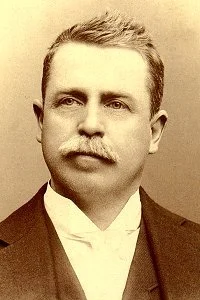
Samuel Ward was an American organist and composer.
Ward studied music in New York and became an organist at Grace Episcopal Church in Newark in 1880. He is remembered for his hymn Materna (1882), which was used for the anthem America the Beautiful, with words by Katharine Lee Bates. However, Ward never met Bates. He died in 1903 in Newark and was buried in Mount Pleasant Cemetery. Ward was inducted into the Songwriters Hall of Fame in 1970.


